
From browsing rooms to planning a stay.
A WordPress-to-Webflow rebuild with a direct-booking journey.
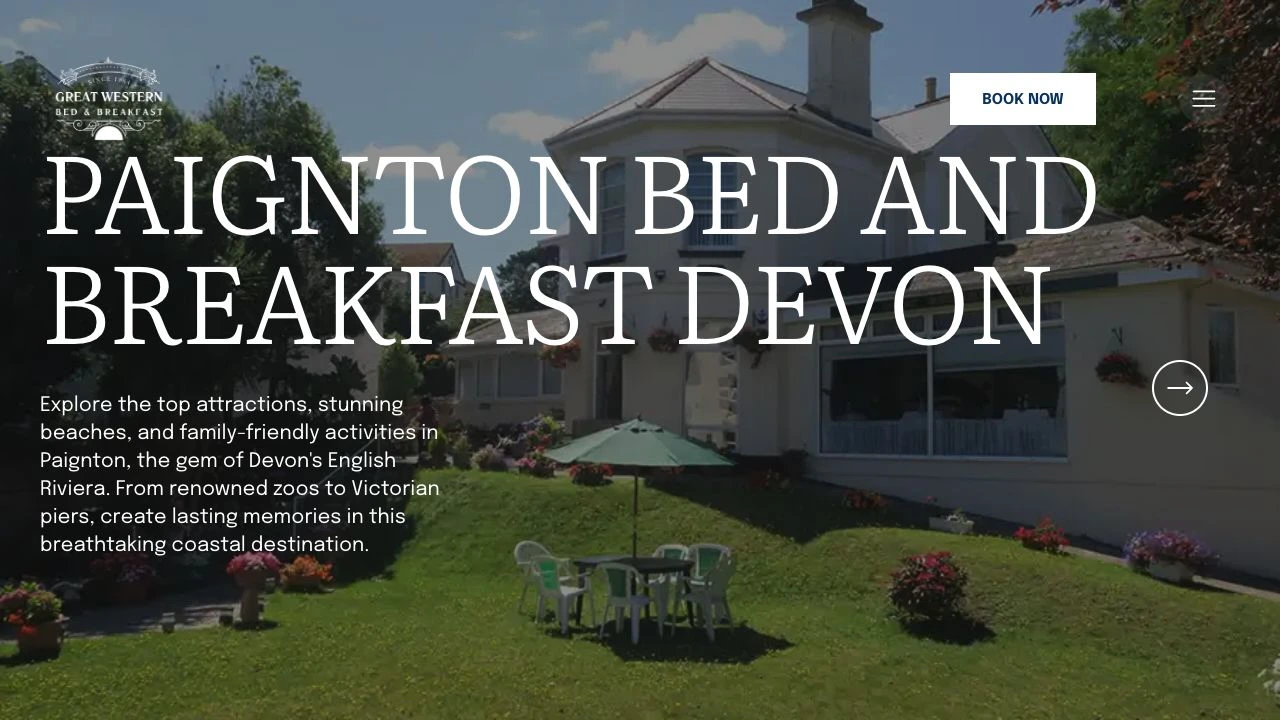
Current public website, captured October 2026.
A one-page website was limiting the guest journey.
The Great Western Hotel in Paignton, Devon, approached TIN with an outdated one-page website and a reliance on Booking.com. At the time of the engagement, the seasonal bed and breakfast needed its own website to play a more useful part in attracting guests and handling reservations.
A prospective guest could not properly explore individual rooms. Behind the scenes, the business also needed a more coordinated way to manage bookings arriving through different channels. The public website and the reservation operation had to be considered together.
Give each room its own place.
We moved the website from WordPress to Webflow and expanded it into a multi-page experience. Individual room pages made space for detailed descriptions and photography, helping guests compare their options before getting in touch.
The original delivery included prompts encouraging visitors to contact the hotel directly about reservations. A channel manager was also installed to bring reservations from the website and third-party channels into a centralized system.
Turn browsing into an informed choice.
A room is a substantial part of the decision to stay. The room collection gives visitors a way to compare the accommodation, then continue into individual pages for more detail.
The current site retains that room-led approach. It lets the property show what makes each option different instead of trying to fit the whole offer into a single overview.
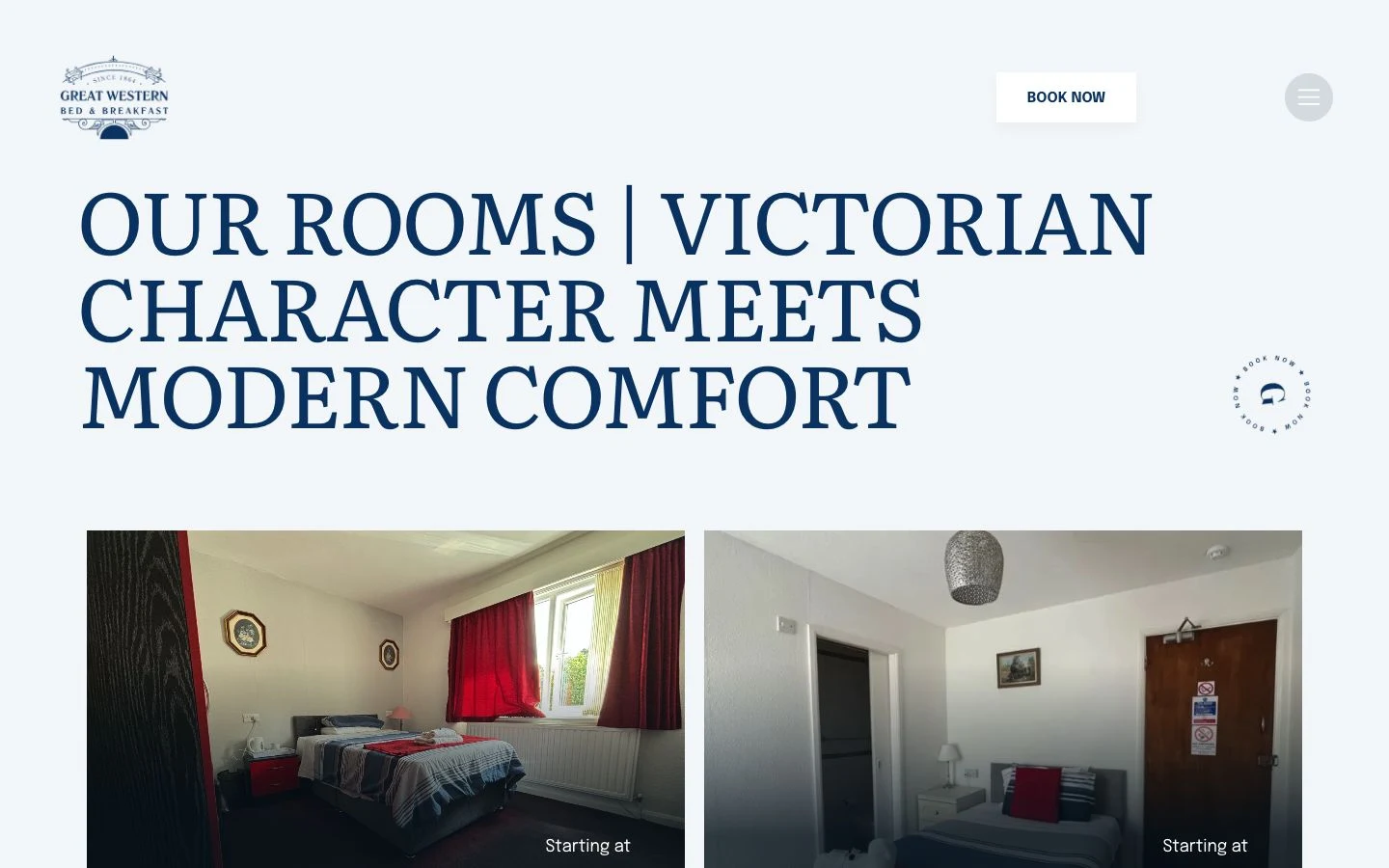
The public Webflow site’s room collection, captured October 2026. Displayed prices are part of the capture, not current quotations.
Show the place behind the room.
Room specifications answer practical questions; the property’s story helps guests imagine the stay. The hotel’s heritage page gives its setting and character room alongside the accommodation content.
That balance matters for an independent property. The website needs to make the hotel recognizable while keeping the route to contact and booking close at hand.
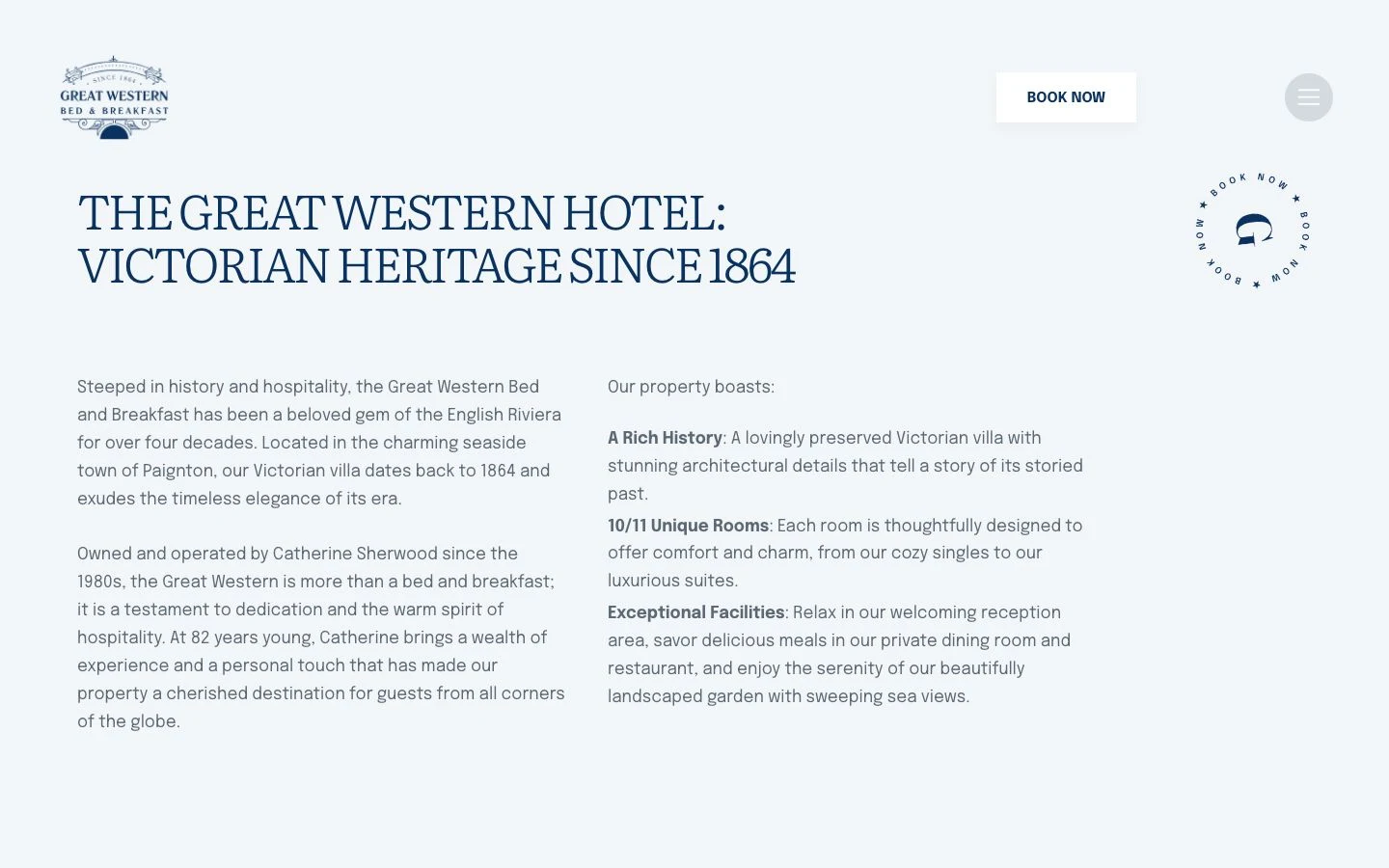
The hotel’s heritage page on the public website.
Connect the booking journey to the operation.
The channel manager addressed a separate requirement from the website design: managing reservations across more than one source. Including it in the engagement connected the new direct-booking journey to the hotel’s day-to-day administration.
The rebuild therefore had two audiences. Guests needed clearer room information and a route to reserve; the hotel needed a way to coordinate those reservations with its other booking channels.
More room to explore. A direct route to book.
The project replaced a limited one-page presence with a room-led Webflow website, direct-contact prompts and channel-management support. The current screenshots show the property’s public experience today; booking details and prices can change.
More website stories.
All website case studies
What does your website need to do?
Tell us about your business, the people using your website and what needs to work better.
Discuss your platform